
Earlier versions were published in March, 2019 and February, 2020
On March 23, 1849, months after his wife and children were sold to a new owner, Henry Brown escaped slavery in Richmond, Virginia in a wooden box, sent by express mail to Philadelphia. After a harrowing 27-hour-long trip by railroad, steamboat, and wagon (part of it upside down) he arrived unharmed at the office of the Pennsylvania Anti-Slavery Society on Saturday morning, March 24, 1849. He had decided on an “arrival hymn” in advance, should he survive the journey. Henry Brown described singing the hymn in his own Narrative, as did William Still in his account of Brown’s arrival in the box.

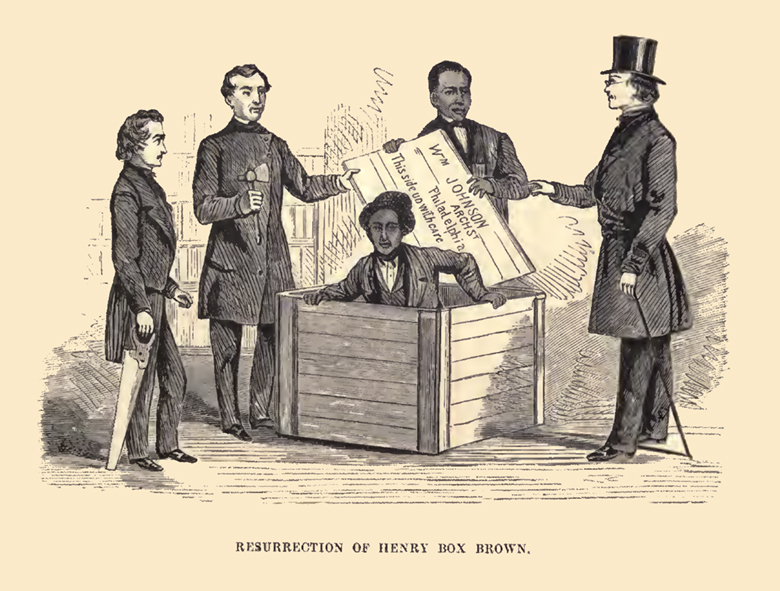
The hymn, which was soon printed in a shortened and full version with a depiction of the box, marked the beginning of Henry “Box” Brown’s career as a performing artist. He toured the country as an antislavery speaker and performer until the Fugitive Slave Act of September 18, 1850 forced him to move to England, where he continued to tour with a moving antislavery panorama.
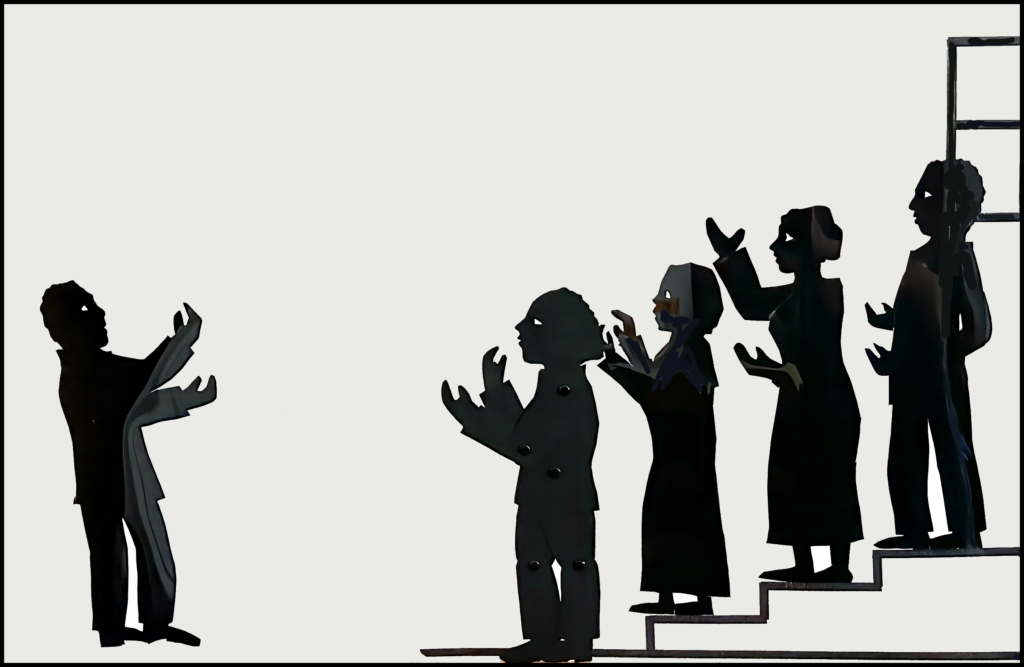
The story acted out as shadow play
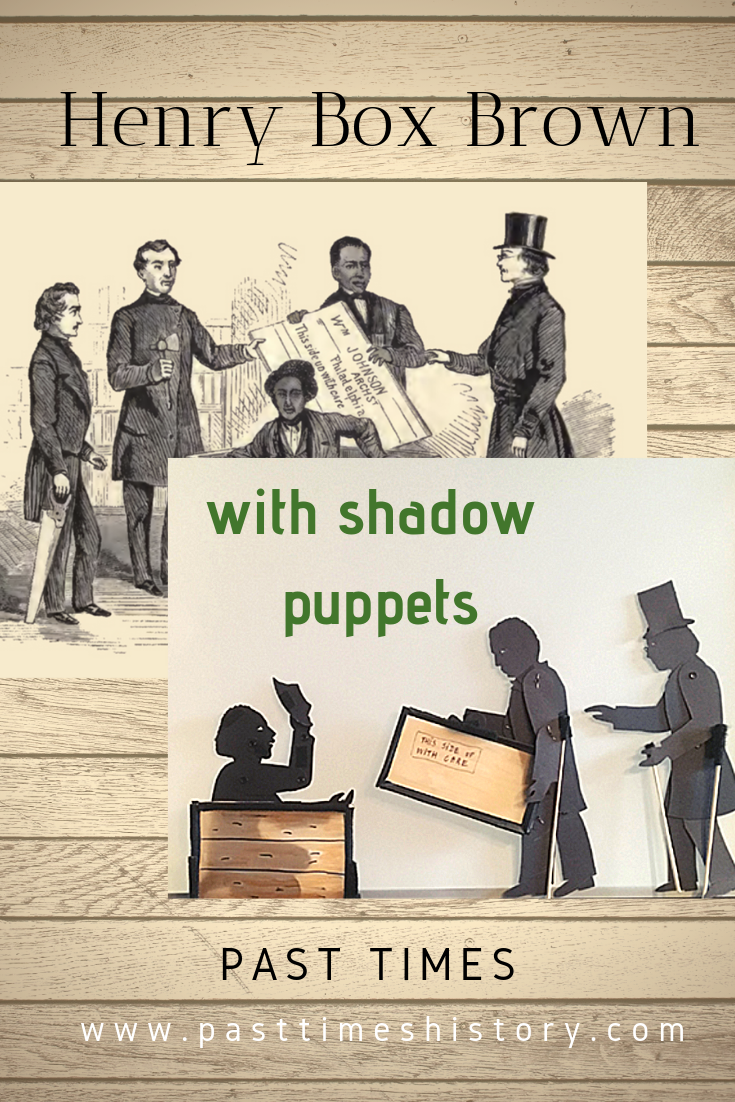
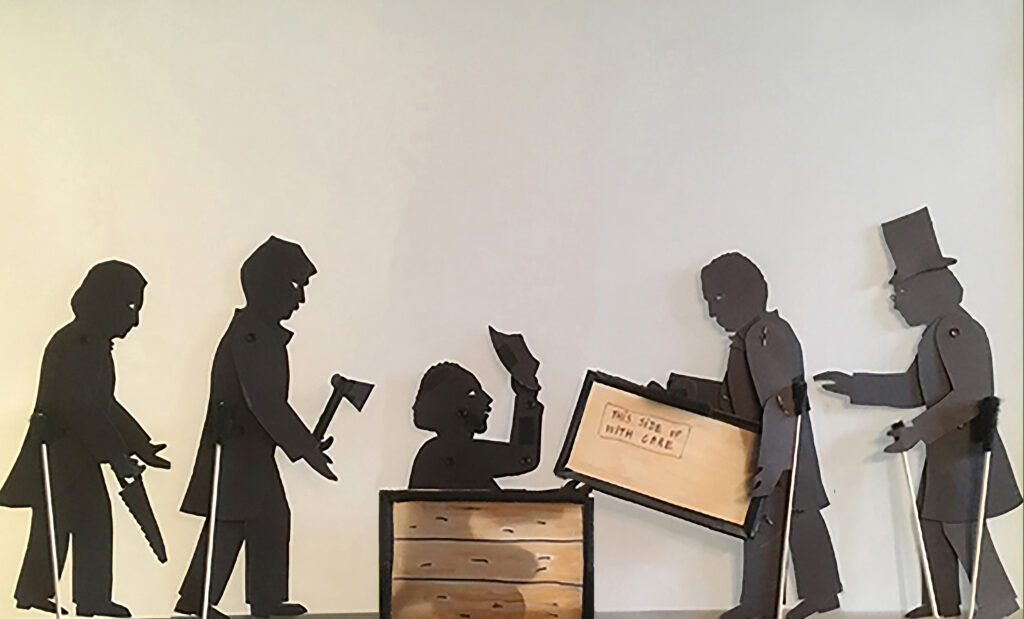
In 2019 and 2020 I partnered with 5th grade teacher Davie-Lyn Jones Evans using the story of Henry Box Brown as a Black History Month project to teach about slavery and the Underground Railroad. While I used shadow puppets to act out just scenes of the story in 2019, I tried out a scrolling screen in 2020.

Shadow play of the story of Henry Box Brown, 2020
The brief video above may be used as an introduction to the story prior to students making their own shadow puppets to act out parts of the story or sing along with the song that Henry Box Brown wrote about his escape from slavery.
- Davie-Lyn Jones-Evans: A teacher’s “hard history” project continued from home
The song “Escape from Slavery”
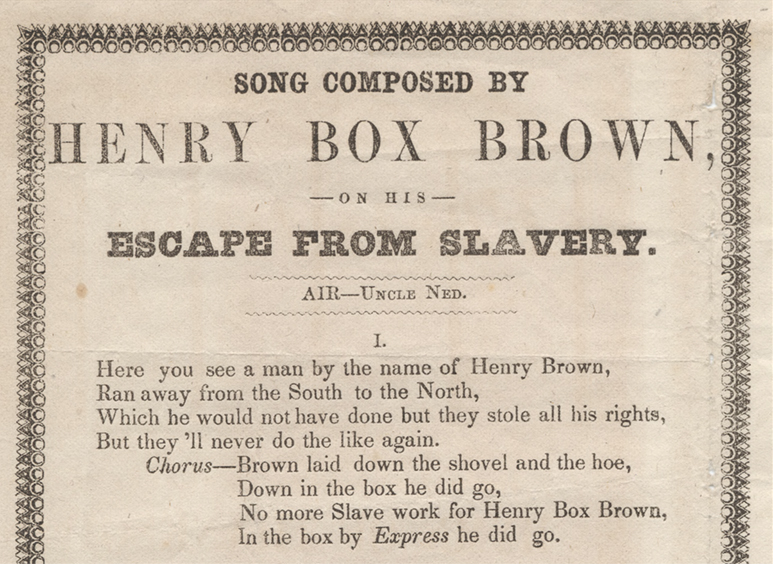
Like the Hymn of Thanksgiving, the song Escape from Slavery was printed to help his cause, both with a depiction of the box and without. Brown set the lyrics to commemorate his “fete in the box” to the tune of Uncle Ned, a popular minstrel song at the time. As Brown’s biographer Jeffrey Ruggles describes in The Unboxing of Henry Brown, by 1849 blackface minstrel shows were the most popular form of entertainment in the North. Abolitionists hated the racist genre, but as singing was an integral part of antislavery meetings they turned some minstrel songs into abolitionist versions by changing the lyrics.

Using the song as an educational tool
The song may be used as an interactive teaching tool about slavery and the Underground Railroad and the innovations in transportation and postal services in the 1840s, which abolitionists and fugitives used to their advantage. The song describes the various stages of Henry Brown’s 27-hour-long journey from Richmond to Philadelphia by Adams Express, which is described in detail by Jeffrey Ruggles and may be followed in this virtual field trip online. The text of the singelong version is slighly adjusted for clarity.

Sing-along version of Escape from Slavery with banjo accompanyment
The “Hymn of Thanksgiving”

Prior to his escape, Brown was a member of the First African Baptist Church in Richmond, Virginia, where he may have learned the song. As Jeffrey Ruggles wrote in his biography of Henry Brown, the church had only split into a white and a Black church in 1841. When I contacted him in February 2019 to ask about the original anthem in the Old Colony Collection, Ruggles suggested that the hymn may have entered the choir repertoire before 1841.
- The Hymn of Thanksgiving that Brown sang can be found as an anthem in The Old Colony Collection of Anthems, 1818.
- First part of Hymn of Thanksgiving arranged for piano and one voice (PDF)
Using shadow puppets to act out the story
The number of people involved in the story and the size of the vehicles make acting out the story on a small screen complicated. As this class performance of the story of Henry Box Brown shows, however, the story makes for an excellent class project with a bigger screen. The puppets used in the performance were created and designed by students themselves.
Templates for the puppets of Henry Brown and William Still, who was present when the box arrived in his office, may be downloaded from our Printable Library. All other puppets can be created from templates in the 19th century mix and match section.
- Step-by-step instructions to a puppet from templates
- Henry Box Brown printable in black (may be glued to cereal box or other thin cardboard)
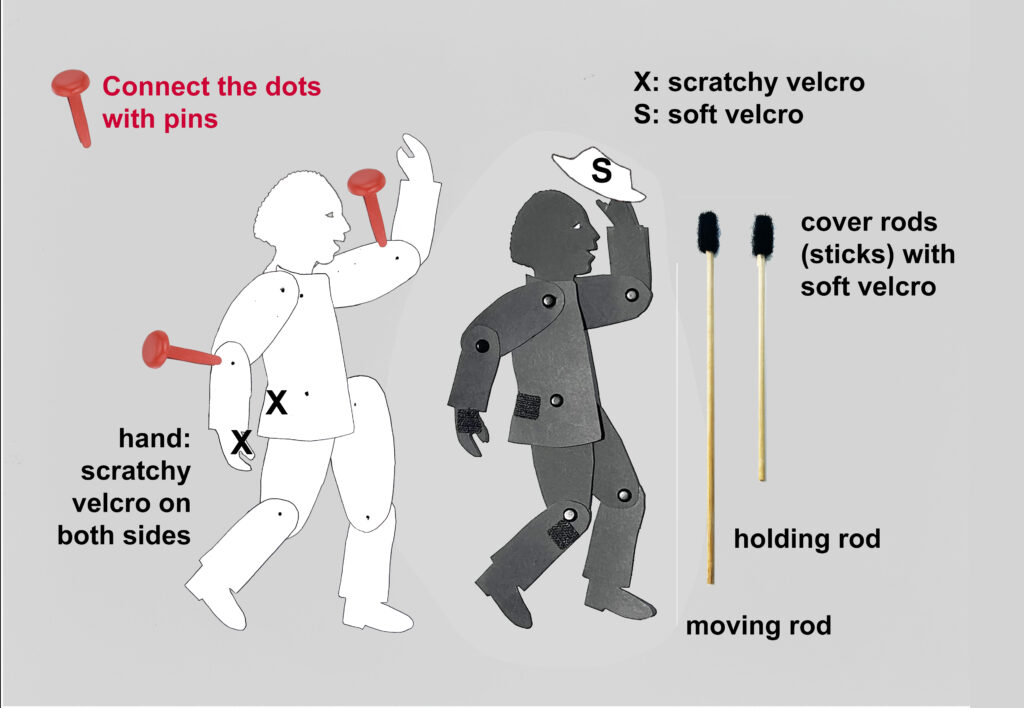

To make Henry wave his hat to fan himself and greet people when coming out of the box, use the inside of his right hand (on the left) to attach the hat and the outside to attach the holding rod
Picture book
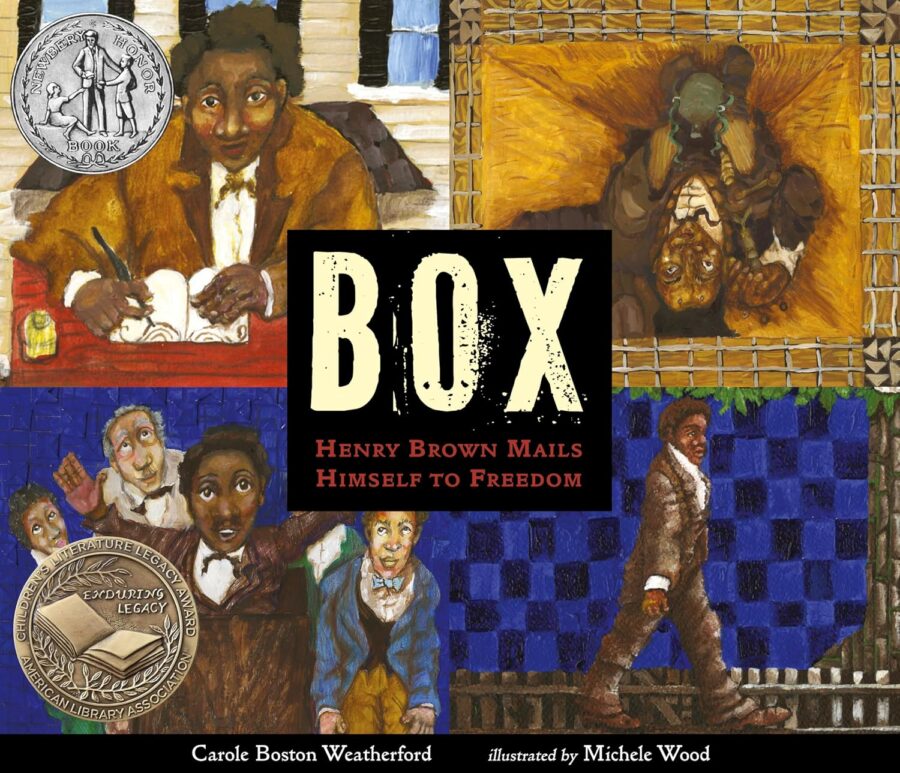
A great children’s book to use as an introduction to the story is Box: Henry Brown mails himself to freedom by Carole Boston Weatherford (Author), and Michele Wood (Illustrator), which is based on original sources and features beautiful illustrations using colors of the time (read about the book).

Further reading
- Narrative of the Life of Henry Box Brown, Written by Himself (Manchester, 1851) (electronic version)
- William Still: The underground railroad : A record of facts, authentic narratives, letters, &c. (..) (revised edition, 1878)
- Jeffrey Ruggles, The Unboxing of Henry Brown (biography, 2003)
- Hollis Robbins, “Fugitive Mail: The Deliverance of Henry “Box” Brown and Antebellum Postal Politics” (scholarly article, 2011)
- Martha Cutter, “Will the Real Henry “Box” Brown Stand Up?” (scholarly article, 2015)
- Henry Box Brown virtual field trip–House Divided, Dickinson College (detailed explanation of the trip including quotes, timeline, and historical map overlays on Google Earth. Includes educational resources and lesson plans.)
- Encyclopedia Virginia: Henry Box Brown (historical summary, resources, primary sources)
With many thanks to Jeffrey Ruggles for sharing his insights, to the Albemarle singers for their performances, and Rob Wegman for his arrangement of the Hymn of Thanksgiving and creating the score and mp3 file of the music